

 techend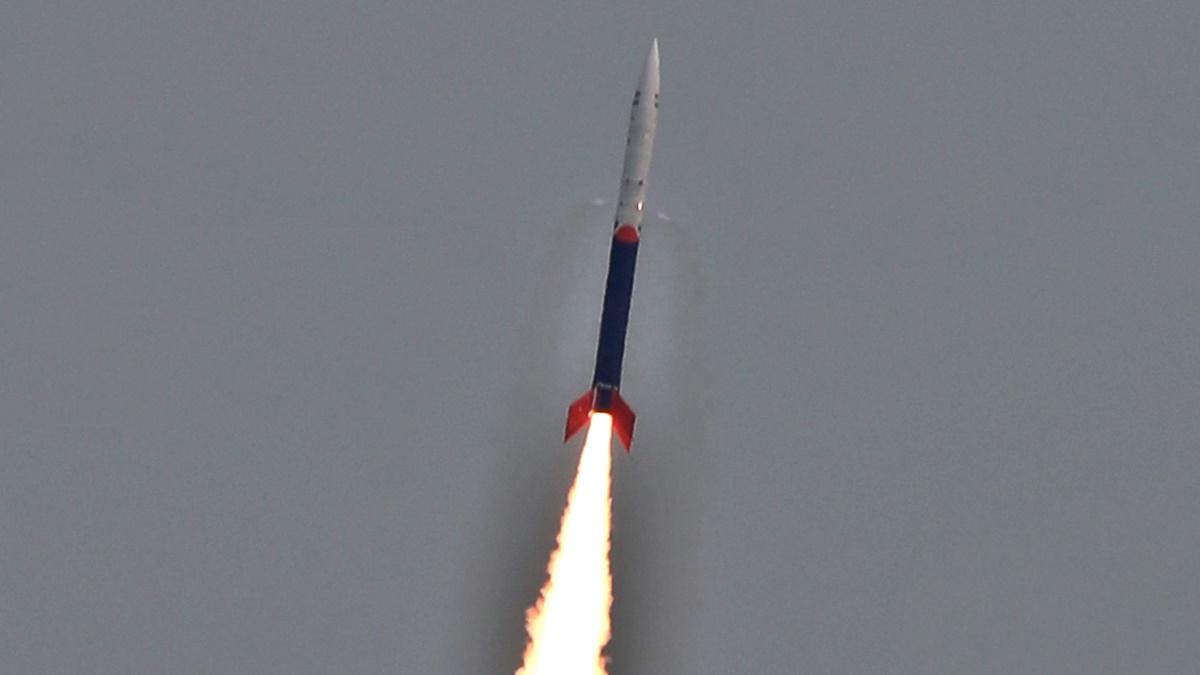
By Sabeeh Zanair :
Indian space startup Skyroot Aerospace has successfully launched the country’s first privately developed orbital rocket, marking a major milestone for India’s commercial space industry and strengthening its ambitions in the global satellite launch market.
The Vikram-1 rocket lifted off from the Satish Dhawan Space Centre in Sriharikota on Saturday after a brief delay to the scheduled launch. Around 15 minutes after liftoff, the launch vehicle successfully placed its payload into a 450-kilometre low-Earth orbit, completing its maiden orbital mission known as Mission Aagaman.
The achievement makes India the third country where a private company has independently demonstrated orbital launch capability, underscoring the rapid growth of the country’s commercial space sector following its liberalisation in recent years.
Skyroot said the mission successfully validated the rocket’s propulsion system, avionics, telemetry, guidance, navigation and control technologies while collecting flight data that will support future commercial missions.
In a statement, the company described Mission Aagaman as a complete success, adding that further test flights are planned before the rocket enters regular commercial service.
Founded in 2018, Hyderabad-based Skyroot Aerospace has emerged as one of India’s leading private space companies. Earlier this year, it became the country’s first space startup to achieve a valuation of more than $1 billion, reflecting growing investor confidence in India’s expanding space economy.
The launch comes at a time when private companies worldwide are competing for a larger share of the rapidly growing small satellite launch market.

Standing approximately 22 metres tall, the Vikram-1 rocket is capable of carrying payloads of up to 350 kilograms into low-Earth orbit. The vehicle uses a three-stage solid-fuel propulsion system together with a liquid-fuel orbital adjustment module powered by a 3D-printed engine, a technology the company says is being flown for the first time in India.
The maiden mission carried several customer payloads and technology demonstration experiments from Indian and international organisations. These payloads are intended to test new satellite technologies and gather data for future commercial missions.
The successful orbital launch builds on Skyroot’s earlier Vikram-S mission in 2022, which became the first privately developed rocket to reach space from Indian soil during a suborbital test flight.

India opened its space sector to private investment in 2020, ending decades in which launch activities were dominated by the Indian Space Research Organisation (ISRO). Since then, dozens of startups have entered the industry, developing launch vehicles, satellites and space technologies for commercial customers.
The government has set an ambitious goal of increasing the country’s space economy from around $8 billion to $44 billion by 2033, with private companies expected to play a central role in achieving that target.
The mission also comes amid intensifying global competition in the commercial launch industry, where companies are racing to provide affordable access to space for satellite operators. While SpaceX remains the dominant player in the market, emerging launch providers in India, Europe and Asia are seeking to capture a growing share of demand driven by communications, Earth observation and defence applications.
With Vikram-1 successfully reaching orbit, Skyroot Aerospace has taken a significant step towards becoming one of the world’s newest commercial launch providers, opening the door for future satellite missions from India’s rapidly expanding private space sector.
About The Author