
 techend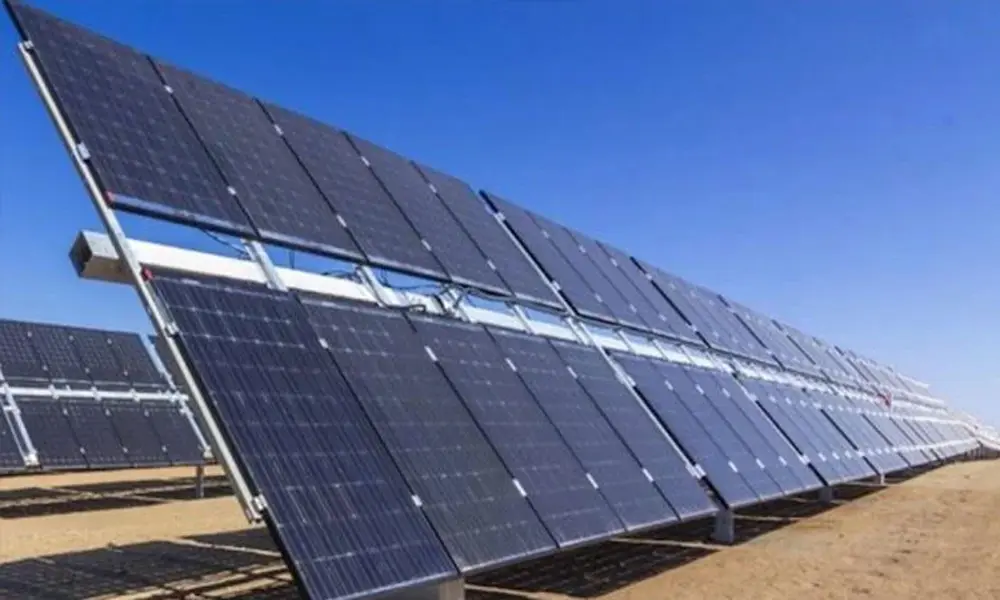
By Malik Shahzad Aslam :
Climate Prosperity Plan sets ambitious targets to expand renewable energy and reduce dependence on fossil fuels
Pakistan has emerged as the world’s third-largest importer of solar panels, reflecting the country’s rapidly growing adoption of renewable energy, according to the government’s newly released Climate Prosperity Plan (CPP).
Prepared jointly by the Ministry of Finance and the Ministry of Climate Change, the report outlines Pakistan’s long-term strategy to accelerate the transition towards clean energy while strengthening climate resilience and reducing carbon emissions.
According to the report, Pakistan imported 17 gigawatts (GW) of solar power systems in 2024, more than double the volume imported the previous year. The sharp increase places the country among the world’s top three solar equipment importers.
The report attributes the surge largely to a significant decline in global solar panel prices, making photovoltaic systems more affordable for households, businesses and industrial users.
Renewable energy to dominate future electricity generation
The Climate Prosperity Plan sets out ambitious goals aimed at transforming Pakistan’s energy mix over the next two decades.
The government plans to increase the share of clean energy to 60% by 2030, while renewable sources are expected to account for 50% of the country’s electricity generation capacity by 2035.
By 2040, the plan envisions renewables—including solar, wind and hydropower—producing 95% of Pakistan’s electricity, significantly reducing reliance on fossil fuels.
Officials say the transition is intended to improve energy security, lower electricity generation costs over the long term and help Pakistan meet its international climate commitments.
Fossil fuel phase-out and grid modernisation
As part of the strategy, the government aims to retire or convert 14,000 megawatts (MW) of fossil fuel-based power plants by 2035.
The plan also focuses on improving the efficiency of Pakistan’s electricity network by reducing transmission and distribution losses from the current 19% to 8%.
Lower transmission losses are expected to improve the financial health of the power sector while increasing the reliability of electricity supply across the country.
The government has also pledged to achieve universal access to electricity, ensuring that all communities have access to power in the coming years.
Solar expansion in public institutions
The roadmap includes plans to expand rooftop solar generation across public infrastructure.
Under the proposal, all government secondary schools would be equipped with rooftop solar systems by 2035, reducing electricity costs and promoting clean energy adoption in the education sector.
Analysts say similar initiatives could help lower pressure on the national grid while encouraging wider use of distributed renewable energy systems.
Carbon credits to generate climate finance
In addition to expanding renewable energy, the government plans to develop Pakistan’s carbon credit market.
The Climate Prosperity Plan aims to generate carbon credits equivalent to 200 million tonnes of carbon emissions annually by 2030, creating opportunities to earn revenue through international carbon trading mechanisms.
Officials believe the programme could attract climate finance and support investment in sustainable infrastructure and environmental projects.
Solar adoption continues to accelerate
Pakistan has witnessed rapid growth in rooftop solar installations in recent years as households and businesses seek alternatives to rising electricity prices and recurring power shortages.
Falling global solar panel prices, combined with improvements in battery storage and net-metering policies, have encouraged greater investment in renewable energy across the country.
Energy experts say Pakistan’s growing reliance on solar power has the potential to reduce fuel imports, improve energy independence and lower greenhouse gas emissions. However, they note that achieving the government’s long-term targets will require substantial investment in electricity transmission infrastructure, energy storage systems and grid modernisation to integrate increasing amounts of renewable power into the national electricity network.