
 techend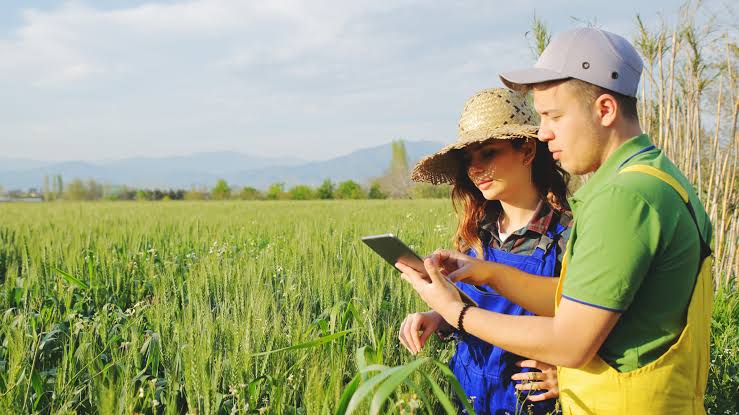
By Malik Shahzad Aslam :
Digital agriculture census reveals shrinking landholdings, livestock growth, rising mechanisation and a rapid shift towards solar-powered farming
Pakistan’s agricultural landscape is undergoing a major transformation, with farms becoming more numerous but smaller and increasingly divided into scattered plots, according to the country’s first fully digital Agricultural Census 2024 conducted by the Pakistan Bureau of Statistics (PBS).
The census recorded 11.10 million farms nationwide, a rise of 34% compared with 8.26 million farms counted in 2010. However, the total agricultural land area increased at a much slower pace, growing only 12% to 59.30 million acres.
The result has been a steady decline in average farm size. The typical Pakistani farm has fallen from 6.4 acres in 2010 to 5.3 acres in 2024, representing a reduction of around 17% over 14 years.
Agriculture experts say the trend reflects increasing pressure on farmland due to population growth, inheritance-based land division and changing rural economic patterns.
Farm fragmentation reaches record levels
One of the most significant findings of the census is the rapid increase in fragmented farmland.
The number of farms divided into multiple separate parcels has risen by 76%, reaching 4.98 million holdings. Nearly 45% of all farms in Pakistan are now fragmented, making efficient farming more difficult.
The scale of fragmentation has also increased. In 2010, a fragmented farm was divided into an average of three separate pieces. By 2024, that number had increased to seven parcels per farm, a rise of 133%.
Overall, the census identified around 34.4 million separate agricultural land parcels across the country.
The problem is most severe in Balochistan, where fragmented farms contain an average of 12 separate pieces of land. Punjab follows with eight parcels, Khyber Pakhtunkhwa with seven and Sindh with four.
Experts warn that scattered farmland increases production costs because farmers must spend more time and resources moving machinery, irrigation equipment and labour between distant plots.
Small farms dominate Pakistan’s agriculture
The census shows that small landholdings now represent the majority of Pakistan’s farms.
Around 6.55 million farms, or nearly six out of every ten holdings, are smaller than 2.5 acres. However, these farms collectively occupy only about 17% of total agricultural land.
At the other end of the spectrum, farms of 25 acres or more represent only 1.4% of all holdings, but control around 15% of farmland.
This uneven distribution highlights the challenge of improving productivity among millions of small farmers who often lack access to modern machinery, finance and technology.
Tenant farming declines as ownership rises
The census also reveals a major shift in land ownership patterns.
Owner-operated farms increased by 46%, reaching 9.81 million, and now represent around 88% of all farms.
Meanwhile, tenant farming declined significantly. The number of farms operated entirely by tenants dropped 17% to 765,000, while farms managed by cultivators who both own and rent land fell 13% to 524,000.
Tenant-operated farmland also declined by 12%, falling to 9.10 million acres.
However, the data shows tenant farmers often use land more intensively. Tenant farms recorded a 98% land-use intensity rate, compared with 95% for owner-operated farms. Their cropping intensity was also higher, at 163% compared with 155% for owner farms.
Livestock sector expands rapidly
While farmland is becoming smaller, Pakistan’s livestock sector has experienced significant growth.
Compared with the 2006 Livestock Census, animal populations have increased sharply.
Pakistan’s goat population has reached 95.83 million, an increase of 78%, making goats the country’s largest livestock category.
Cattle numbers increased 89% to 55.86 million, buffaloes rose 75% to 47.74 million, and sheep grew 68% to 44.58 million.
Dairy production capacity has also expanded. The number of milk-producing cows increased by 140% to 20.93 million, while milk buffaloes increased by 111% to 21.56 million.
Punjab remains the largest livestock-producing province for cattle, buffaloes and goats, while Balochistan dominates sheep and camel populations.
The livestock sector now contributes around 63.6% of agricultural value addition and nearly 15% of Pakistan’s GDP, making it a more significant contributor than many traditional crop sectors.
Mechanisation rises, but rental farming becomes common
Pakistan has seen a major increase in agricultural machinery, particularly tractors.
The number of tractors has reached 986,998, up from 401,663 in 2004 — an increase of 146%.
Punjab accounts for nearly 79% of the country’s tractor fleet, while Balochistan recorded the fastest growth, with tractor numbers rising by more than 500%.
However, the census highlights that many farmers rely on rented machinery rather than owning equipment.
For example, rented cultivators nearly matched privately owned machines, while rented rotavators exceeded owned units by more than two-and-a-half times.
The trend reflects the reality of small-scale farming, where purchasing expensive machinery is often financially impossible.
Solar power transforms irrigation
One of the biggest technological changes revealed by the census is the rapid adoption of solar-powered irrigation.
The number of tubewells and lift pumps has nearly doubled, reaching 1.83 million units, a 97% increase since 2004.
Solar energy now powers 959,865 irrigation systems, accounting for 52% of all irrigation power sources.
Meanwhile, diesel-powered irrigation units declined by 36%, as farmers increasingly move away from expensive fuel-based systems.
Electric-powered irrigation systems increased significantly, while deeper-water technologies also expanded. Submersible pumps rose by more than 2,300%, reflecting growing dependence on underground water resources.
Crop production intensifies, but cotton continues decline
Pakistan is producing more crops from nearly the same amount of land.
Cultivated land increased by 24% to 52.79 million acres, while land-use intensity improved from 83% to 95%.
Total cropped area expanded to 82.77 million acres, a rise of 22%.
Wheat remains Pakistan’s dominant crop, covering 35.82 million acres, or around 43% of total cropped area.
Maize recorded the strongest growth among major crops, expanding 76% to 4.20 million acres.
Rice cultivation increased 15%, while orchard farming expanded by 42%.
However, cotton continues to decline. The area under cotton cultivation dropped 29% to 6.51 million acres, reflecting the long-term struggles of Pakistan’s once-important cash crop.
Agriculture enters a technology-driven future
The 2024 Agricultural Census presents a mixed picture of Pakistan’s farming sector.
While smaller farms, land fragmentation and declining cotton production remain major challenges, the growth of livestock, mechanisation and solar-powered irrigation shows rapid adaptation among farmers.
Experts say the future of Pakistani agriculture will depend on policies that support small farmers, encourage land consolidation, expand access to technology and improve water management.
The census suggests that Pakistan’s agricultural future may not be built on larger farms, but on smarter, more efficient and technology-driven farming systems.