

 techend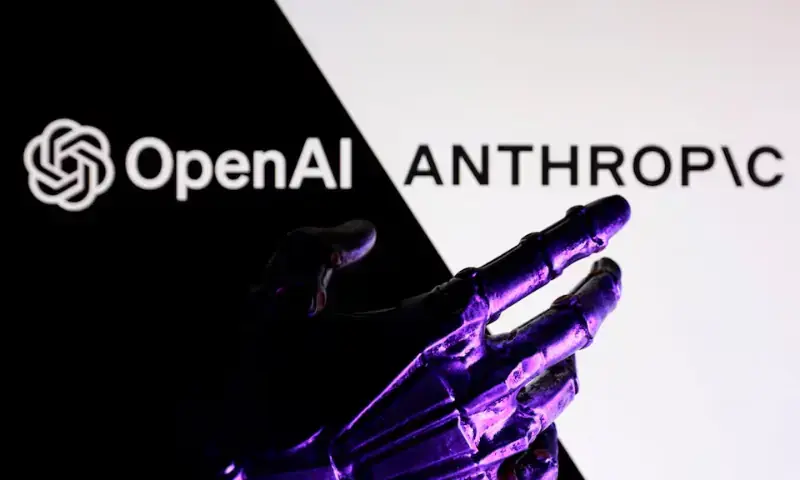
By Sabeeh Zanair :
Government controls on leading AI systems raise questions over the future of closed artificial intelligence platforms
A sudden US government push to restrict access to some of the world’s most advanced artificial intelligence systems has accelerated interest in open-source and open-weight AI models, with Chinese developers gaining renewed attention as companies and researchers seek alternatives to tightly controlled platforms.
The restrictions targeting leading AI companies such as OpenAI and Anthropic have reignited a long-running debate in the technology industry: should powerful artificial intelligence remain controlled by a small number of companies, or should advanced models be openly available for developers and businesses to use?
For years, the most recognised AI systems, including OpenAI’s ChatGPT and Anthropic’s Claude, have operated as closed platforms. Their underlying code, training data and model architecture remain private, while users access them through applications or subscription services controlled by the companies.
Open-source and open-weight models follow a different approach. Developers release key model files that allow users to download, customise and operate the systems independently on their own infrastructure.
Supporters argue this provides greater control, lower costs and protection from sudden changes in access policies.
Restrictions raise concerns over AI dependency
The debate intensified after the Trump administration introduced measures affecting access to advanced AI models developed by US companies.
In one case, Anthropic was reportedly required to restrict access to its most powerful systems, including Mythos 5 and Fable 5, for users outside the United States. Due to the difficulty of implementing detailed access controls, the company removed the models from availability.
The move surprised many developers who had expected AI companies to continue releasing increasingly capable systems with limited government involvement.
Technology entrepreneurs warned that dependence on a single AI provider could create risks if access is suddenly restricted.
“If everything you need to do has to be on a specific frontier model, that makes whatever you’re building a whole lot less reliable when it is suddenly unavailable,” said Oren Michels, co-founder and CEO of Barndoor AI.
For some users, the disruption highlighted the importance of having alternative AI systems that cannot easily be switched off by governments or companies.
Chinese open models gain momentum
Interest in open AI models was already increasing due to the rising cost of using premium closed systems.
Chinese artificial intelligence company Zhipu AI (Z.ai) recently gained attention after releasing GLM-5.2, an open model that performed competitively against some leading commercial AI systems in several industry benchmarks.
The model can be downloaded, customised and operated on private servers, giving businesses greater control over costs, data and deployment.
AI analyst Andrew Curran said open models such as GLM-5.2 are putting pressure on major AI companies by offering powerful alternatives without requiring expensive subscriptions.
Other Chinese developers, including DeepSeek, have also expanded their global presence by releasing high-performance open models that have attracted interest from developers worldwide.
Closed AI companies lose ground in some platforms
Data from AI marketplace OpenRouter shows that the combined usage share of major closed AI providers, including Google, Anthropic and OpenAI, declined significantly between January and June.
During the same period, open models, particularly those from Chinese developers, gained more adoption among users looking for cheaper and more flexible options.
Experts say businesses are increasingly avoiding dependence on a single AI provider and instead adopting a multi-model strategy.
“You want to be as flexible as you can be,” said Michels, adding that companies are now less likely to rely exclusively on one AI provider.
Security debate continues
Open AI models have faced criticism from some governments and security experts who argue that unrestricted access could make it easier for malicious actors to misuse powerful technology.
However, supporters of open models argue that once a model is downloaded and operated locally, the original developer has no access to user data or control over how the system is deployed.
Haitham Mengad, co-founder of AI music startup Stems Labs, said concerns about Chinese AI models being security risks are often based more on perception than evidence.
“I don’t think there’s any risk, to be honest,” he said, describing some concerns as more emotional than technical.
Could open models face future restrictions?
Despite growing support for open AI, some experts believe governments may eventually attempt to regulate powerful open models as their capabilities improve.
Ethan Mollick, a professor at the University of Pennsylvania and a prominent AI researcher, said governments may seek tighter controls if open systems become as powerful as the most advanced closed models.
“If Mythos-level models are considered risky, China will also not want them to be open,” Mollick said, suggesting that concerns over advanced AI access could extend beyond any single country.
The future of artificial intelligence access
The recent developments have accelerated a fundamental debate about the future of AI.
Closed models offer companies greater control over safety, updates and commercialisation, while open models provide flexibility, transparency and independence for users.
As artificial intelligence becomes increasingly central to business, research and everyday technology, the competition between open and closed approaches is likely to shape how powerful AI systems are developed, distributed and regulated in the years ahead.