
 techend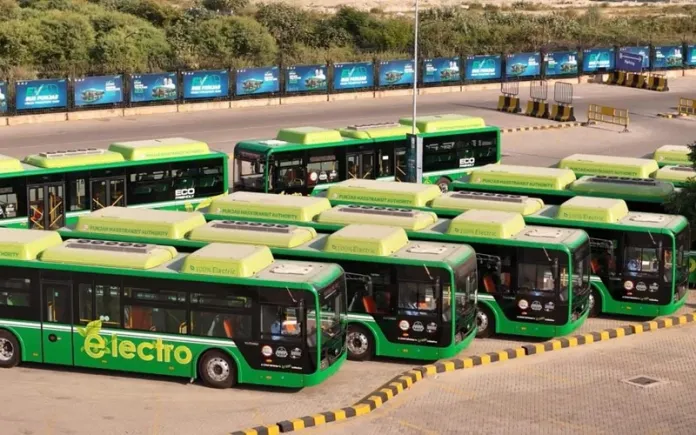
By Sabeeh Zanair :
Pakistan has taken a significant step towards reducing its reliance on imports and modernising public transport, as Heavy Industries Taxila begins local production of electric buses.
The initiative marks a shift in the country’s industrial strategy, moving beyond assembly towards building a domestic ecosystem that includes manufacturing, workforce training and technological integration. Officials say the move is designed to address multiple national challenges, including rising import costs, urban pollution and the need for skilled employment.
Pakistan has long depended on imported vehicles for its transport systems, placing pressure on foreign exchange reserves. By manufacturing electric buses locally, authorities aim to redirect spending into the domestic economy, supporting industrial growth while reducing external dependence.
At the same time, the transition to electric mobility is seen as a response to worsening air quality in major cities such as Lahore, Karachi and Islamabad. Diesel-powered buses are a major contributor to pollution, emitting particulate matter and greenhouse gases. Electric buses, by contrast, produce no tailpipe emissions and are expected to help reduce both air and noise pollution in densely populated urban areas.
Industry experts say the project could also play a key role in developing Pakistan’s technical workforce. Electric vehicle manufacturing requires expertise in areas such as battery systems, power electronics and software integration, offering opportunities for high-skilled jobs and training. The development of local supply chains is also expected to create indirect employment across logistics, components and maintenance services.
Another advantage highlighted by officials is the ability to tailor vehicles to Pakistan’s diverse geography and climate. Locally produced buses can be designed to cope with extreme temperatures, varying terrain and road conditions, which differ significantly from those in markets where most imported vehicles are manufactured.
The move is part of a broader effort to strengthen industrial self-reliance and position Pakistan within the global shift towards electric mobility. Analysts say success will depend on factors such as cost competitiveness, scaling up production and adoption by public transport authorities.
While questions remain about long-term implementation, the launch signals an attempt to align economic priorities with environmental goals. If expanded effectively, local electric bus production could help Pakistan reduce emissions, create skilled jobs and build a more resilient industrial base.
About The Author