
 techend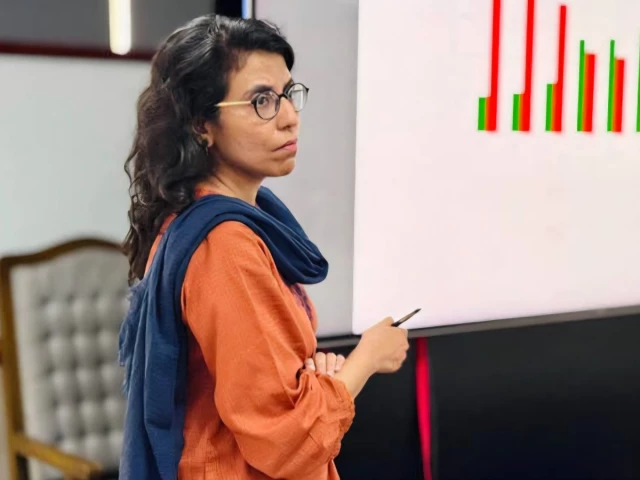
By Tanveer Ahmed :
A leading Pakistani scientist, Nousheen Zaidi, has become the first from the country to receive the prestigious Georg Forster Research Award, marking a notable achievement for Pakistan’s academic and scientific community.
Dr Zaidi, a professor at the Public Health, Environment and Applied Research Lab (PEARL) within the Institute of Microbiology and Molecular Genetics at the University of the Punjab, was honoured for her contributions to research and academia.
The award is presented annually by the Alexander von Humboldt Foundation to internationally recognised scholars from developing and transition countries. Named after German ethnologist Georg Forster, it recognises researchers whose work has had a significant impact in their respective fields. The prize includes funding of €60,000 to support further research.
To mark the occasion, the Deputy Head of Mission at the German Embassy in Islamabad, Arno Kirchhof, hosted a reception in her honour at the Annemarie Schimmel Haus, attended by prominent academics and scientists.
Dr Zaidi’s academic background includes a doctorate in biochemistry from the University of Tübingen. Her international research experience spans institutions such as the Albert Einstein College of Medicine and Janssen Pharmaceutical, reflecting a career shaped by global collaboration.
In addition to her laboratory work, she is actively involved in public health initiatives across Pakistan. As director of the Action Research Collective, she leads a nationwide effort to map water quality, a project that is expanding to several cities and aims to address pressing environmental and health concerns.
She is also overseeing the Roshan Clinics initiative, which focuses on tackling childhood stunting through community-based interventions. Her work is widely seen as bridging advanced scientific research with practical, on-the-ground solutions to some of Pakistan’s most urgent public health challenges.
Experts say the recognition not only highlights Dr Zaidi’s individual achievements but also underscores the growing contribution of Pakistani scientists to global research, particularly in areas that directly impact sustainable development and human wellbeing.
About The Author