
 techend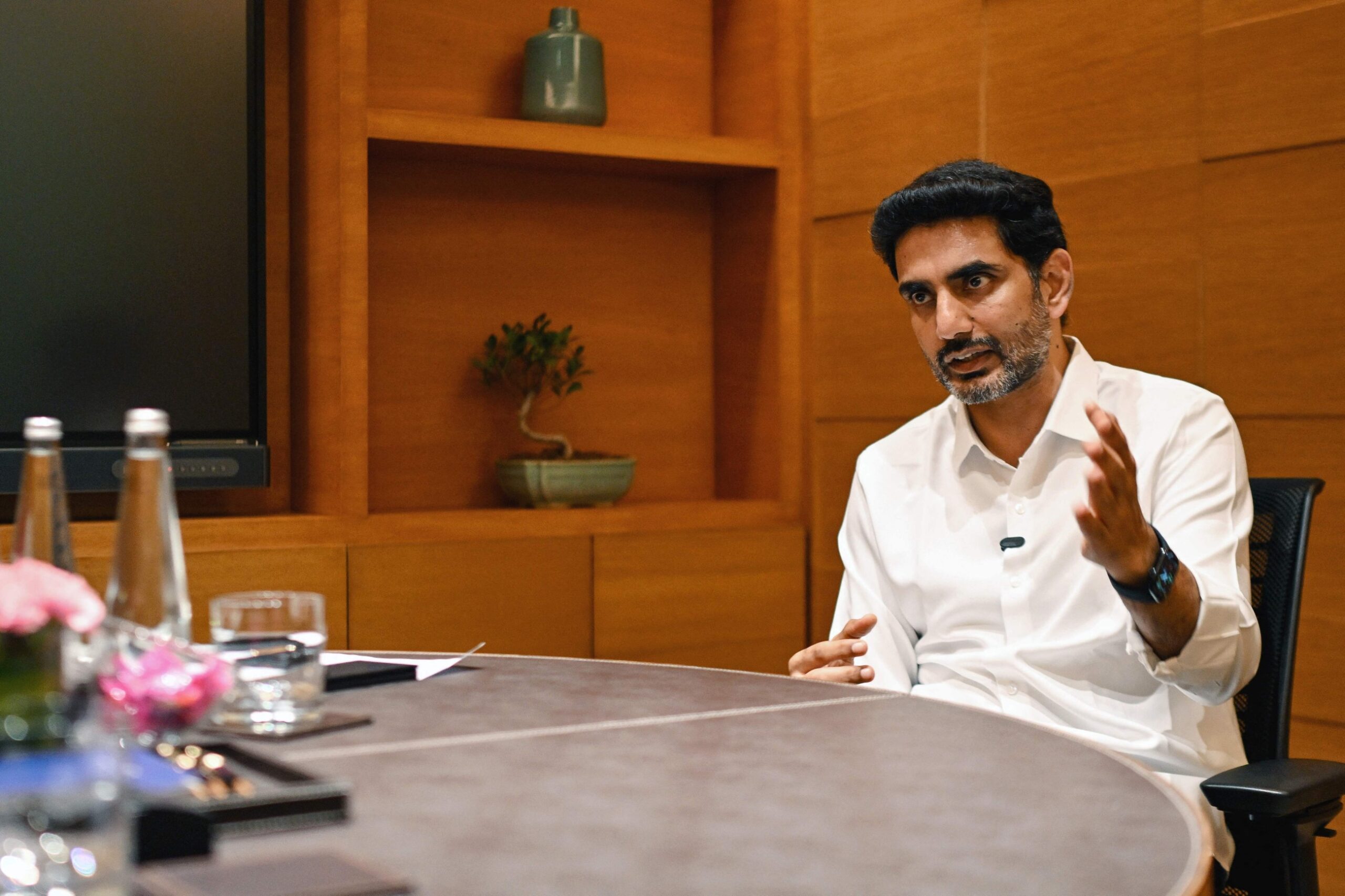
By Web Desk :
As India seeks to narrow the artificial intelligence gap with the United States and China, it is planning a massive new “data city” to drive digital growth at an unprecedented scale, according to a senior state official spearheading the initiative.
“The AI revolution is here, no second thoughts about it,” said Nara Lokesh, the information technology minister of India’s Andhra Pradesh state, which is positioning the port city of Visakhapatnam as a cornerstone of the country’s AI ambitions.
“And as a nation… we have taken a stand that we’ve got to embrace it,” Lokesh told AFP ahead of an international AI summit in New Delhi.
Lokesh said the state has secured investment commitments worth $175 billion across 760 projects, including a $15 billion investment by Google for what would become its largest AI infrastructure hub outside the United States.
In another major project, a joint venture between India’s Reliance Industries, Canada’s Brookfield, and US-based Digital Realty is investing $11 billion to develop an AI-focused data centre in the same city.
Visakhapatnam — home to around two million people and popularly known as “Vizag” — has traditionally been known for its naval base and international cricket stadium. But the southeastern city is now being pitched as a major landing point for submarine internet cables linking India to Singapore.
“The data city is going to come in one ecosystem… within a 100-kilometre radius,” Lokesh said, comparing the scale to the width of Taiwan.
Beyond Data Centres
Lokesh said the project extends far beyond data storage.
“It’s not just about the data centres. I’m chasing the companies that make the servers, the air conditioning systems, the water-cooling technology — the whole nine yards,” he said.
Andhra Pradesh is offering land at highly subsidised rates as low as one US cent per acre — to attract global investors. Lokesh claimed the state accounted for nearly 25 percent of all foreign direct investment into India in 2025.
The 43-year-old, Stanford-educated minister is the son of N. Chandrababu Naidu, who previously transformed Hyderabad into a major technology hub often referred to as “Cyberabad”.
Both are political allies of Prime Minister Narendra Modi, who is hosting the AI Impact Summit this week.
India now ranks third in global AI power ahead of South Korea and Japan — based on more than 40 indicators compiled by Stanford University’s Institute for Human-Centred AI.
With over one billion internet users, India has attracted growing interest from global AI firms. In December, Microsoft announced a $17.5 billion investment in India’s AI infrastructure, with CEO Satya Nadella calling it the company’s largest-ever investment in Asia.
Jobs, Power and Water
Critics argue that large data centres generate limited employment once operational, but Lokesh dismissed the concern.
“Every industrial revolution has created more jobs than it has displaced but only in countries that embraced it,” he said.
He added that the state had planned for the massive electricity and water needs of the sector, including using surplus monsoon water flowing into the Bay of Bengal for cooling.
“It’s a crime that so much water goes into the ocean during monsoons,” he said.
Lokesh cited China as a model, praising how it had lifted millions out of poverty through industrial clusters.
“We’ve learned from China,” he said.
With a target of six gigawatts of data centre capacity — three already approved and three more planned — Andhra Pradesh is betting that speed and scale will give it a decisive advantage.
Last year, New Delhi also granted in-principle approval for six nuclear power plants at Kovvada in Andhra Pradesh to support future energy demands.
“We are on a journey,” Lokesh said. “We will execute these projects at a pace the country has never seen.”
About The Author