
 techend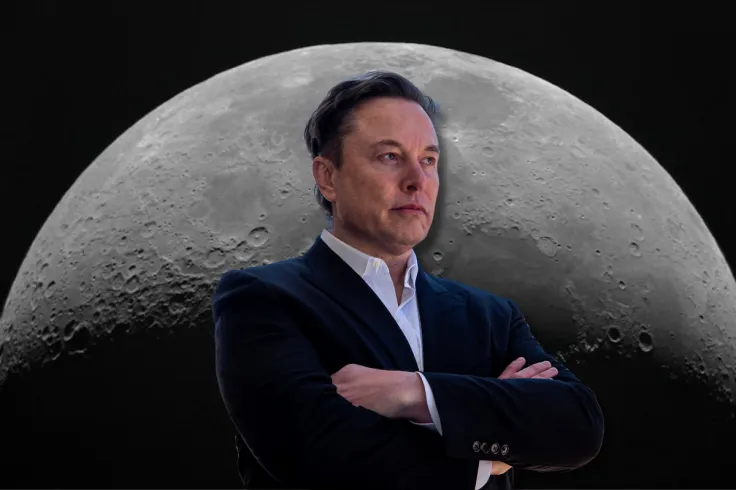
By Malik Shahzad Aslam :
Elon Musk has revealed that SpaceX is now prioritising the creation of a permanent, self-sustaining human settlement on the Moon, signalling a major strategic shift in the company’s long-term space ambitions.
In a post on his social media platform X, Musk said that while Mars remains a core objective, the Moon offers a faster and more realistic pathway for safeguarding the future of human civilisation. He suggested that a functioning lunar city could be established within the next decade, describing it as a “self-growing city” capable of expanding without constant support from Earth.
Musk added that SpaceX still intends to begin work on a Martian settlement within five to seven years, but acknowledged that building infrastructure on the Moon is currently more feasible due to its proximity, lower launch costs, and simpler communication and logistics.
The remarks align with a recent Wall Street Journal report, which claimed SpaceX had informed investors that it would shift its near-term focus toward lunar missions, with an uncrewed landing potentially targeted for March 2027. This represents a departure from Musk’s earlier statements, in which he said an uncrewed Mars mission could take place as early as 2026.
The renewed emphasis on the Moon comes amid intensifying global competition in space exploration, particularly with China, which has announced plans to establish its own lunar base by the 2030s. The United States, meanwhile, is attempting to return astronauts to the Moon through NASA’s Artemis programme, although repeated delays have pushed timelines further into the future.
Musk’s lunar ambitions are also closely tied to SpaceX’s broader technological and commercial strategy. Just days ago, he confirmed that SpaceX had formally acquired his artificial intelligence company xAI in a massive deal valuing SpaceX at around $1 trillion and xAI at approximately $250 billion. Analysts believe the merger will allow SpaceX to integrate advanced AI systems into mission planning, robotics, autonomous navigation, and future space-based computing infrastructure.
Musk has repeatedly argued that space-based data centres could become more efficient than those on Earth, especially as AI-driven demand for computing power continues to surge. These facilities could theoretically use solar energy directly in orbit or on the Moon, reducing reliance on terrestrial power grids.
SpaceX is also reportedly preparing for a historic public offering later this year, with expectations that it could raise up to $50 billion, potentially making it the largest IPO ever. Funds raised would likely be channelled into Starship development, lunar infrastructure, satellite expansion, and human spaceflight systems.
At the same time, Musk continues to diversify across his other companies. Tesla, now the world’s most valuable carmaker, is undergoing its own transformation. The company plans to invest around $20 billion this year into artificial intelligence, robotics, and autonomous driving, shifting away from traditional electric vehicle growth.
Musk recently confirmed that Tesla has halted production of two car models at its California facility to make space for building Optimus humanoid robots, which he believes could eventually become more valuable than the company’s automotive business.
Taken together, Musk’s latest moves suggest a long-term vision centred on AI, automation, and off-world infrastructure — with the Moon now positioned as the first real test of humanity’s ability to become a multi-planetary species.
About The Author