
 techend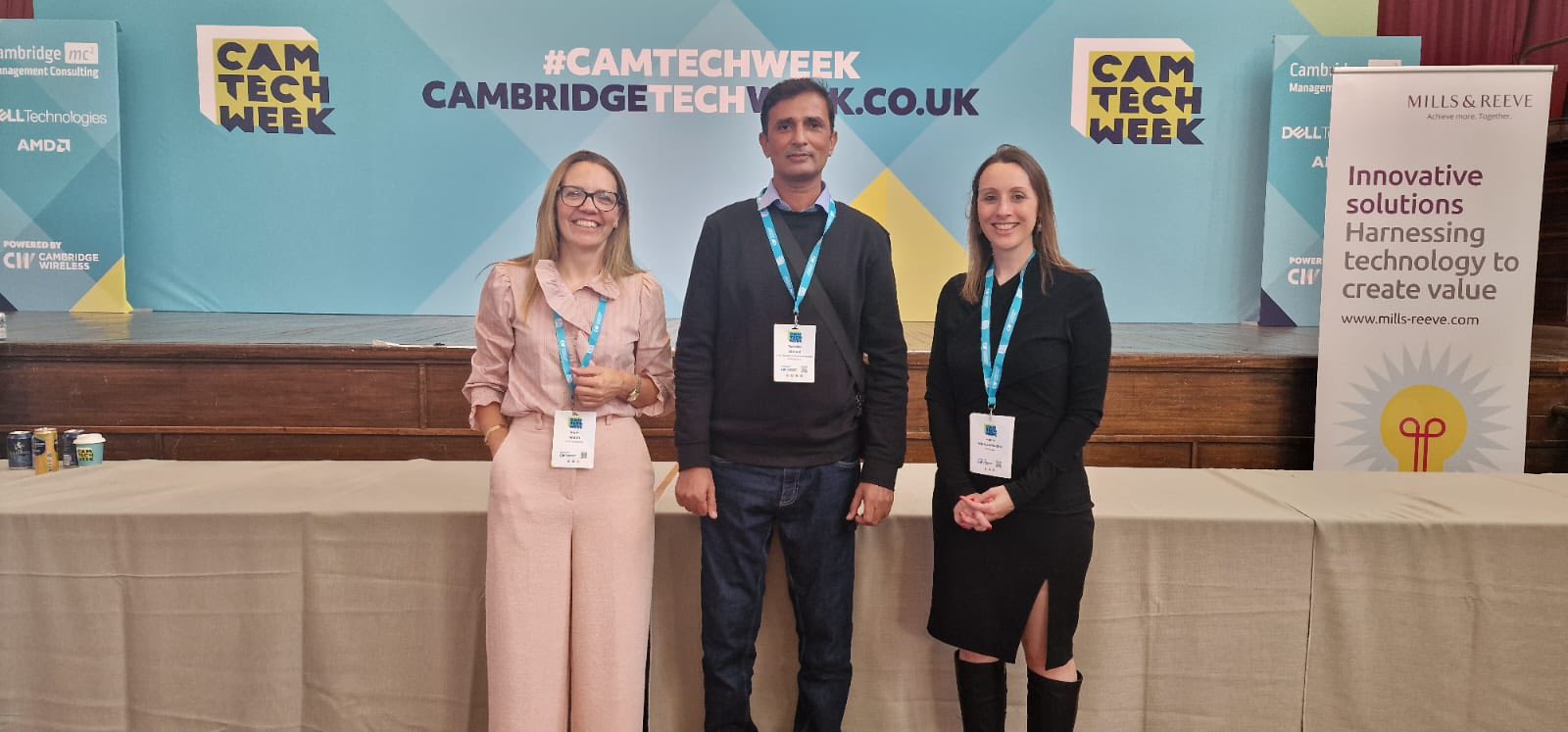
By Tanveer Ahmed :
London : Cambridge Tech Week (CTW) wrapped up its 2025 flagship conference this week, successfully bridging the traditional gap between the UK’s scientific powerhouse, Cambridge, and its commercial heart, London. Operating under the theme “Seizing the AI Advantage,” the event solidified its status as the nation’s premier deep tech gathering, focusing intensely on the practical commercialization of breakthroughs in Artificial Intelligence, Quantum Computing, and Advanced Biotechnology.
The conference, which drew over 5,000 delegates, kicked off a week of intense debate and deal-making, demonstrating a palpable shift from theoretical research to market-ready products. While the main event remains in Cambridge, the dedicated London-based launch event proved pivotal, bringing together venture capital firms, policy makers, and corporate leaders essential for scaling deep tech ventures globally.
The AI Advantage: From Lab to Legislation
Artificial Intelligence dominated nearly every keynote. Discussions centered less on large language models (LLMs)—now considered baseline infrastructure—and more on Agentic AI Systems, the next generation of autonomous software designed to execute complex, multi-step tasks without constant human oversight.
A particularly high-profile panel featuring government policy shapers and tech leaders like Sir Nick Clegg (formerly of Meta) debated the critical need for balanced AI governance. The consensus was clear: the UK needs to regulate for safety while creating “regulatory sandboxes” to maintain a global lead in AI innovation. Companies showcased impressive AI-driven solutions for public good, including systems that accelerate genomic analysis for rare disease diagnosis and predictive models to improve energy grid efficiency.
Quantum Computing: Beyond the Horizon
The Future of Computation Day was marked by a strong focus on Quantum Computing, a sector where the UK continues to punch above its weight. Ilyas Khan, founder of Quantinuum, highlighted the sector’s rapid maturation, moving from pure research toward tangible commercial applications.
The key takeaway was the critical challenge of Post-Quantum Cryptography (PQC). With quantum hardware development accelerating, speakers stressed that the migration window for enterprises to adopt quantum-safe security protocols is shrinking rapidly. The urgency for quantum-resistant solutions was a sobering but necessary counterpoint to the optimistic projections of computational power.
Bio-Innovation and Sustainable Tech
Beyond the digital frontier, CTW underscored Cambridge’s deep-rooted strength in life sciences. Biotech sessions highlighted the revolutionary potential of Synthetic Biology and Metabolomics. Startups demonstrated how engineered microbes are being used for sustainable biomanufacturing, creating everything from lab-grown food proteins to self-healing concrete, marking a significant step towards a circular economy.
The Climate Action Hub emphasized the role of deep tech in achieving net-zero targets. Experts presented advancements in sustainable systems, including the use of advanced materials (like metamaterials) to enhance EV battery performance and the deployment of AI-driven tools for precision agriculture (Agri-tech), ensuring climate resilience in the food supply chain.
The Ecosystem Effect
Rupert Baines, Chair of the CTW steering committee, summed up the event’s significance: “Cambridge is where bold concepts flourish with reduced risk, and London is where they achieve global scale. This Tech Week is the essential connector.”
The expanded ‘Innovation Alley’ and dedicated Start-up to Scale-up Day provided a crucial platform for over 50 deep tech ventures to secure strategic investment. The event successfully demonstrated that the UK’s innovation ecosystem is not just surviving but thriving by focusing on the convergence of science and technology to solve the world’s most pressing challenges. The message from the City of London’s investment community was unambiguous: the UK’s deep tech sector is open for business and ready to lead.
About The Author