
 techend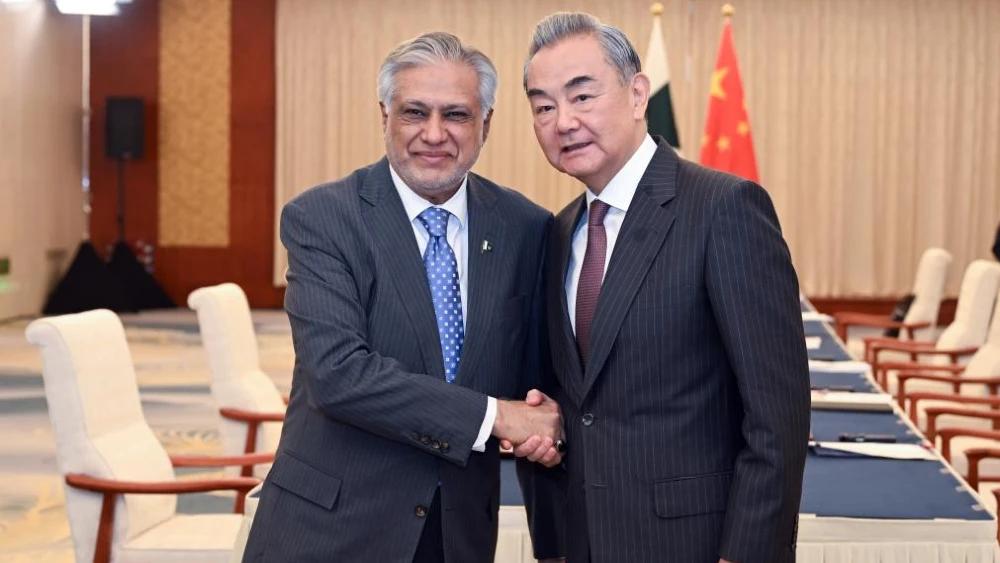
By Tanveer Ahmed :
Pakistan is set to become a founding member of the World Artificial Intelligence Cooperation Organisation (WAICO), as Islamabad joins a China-led effort to shape global rules for artificial intelligence and expand access to AI technologies.
Deputy Prime Minister and Foreign Minister Ishaq Dar has travelled to Shanghai to sign the landmark agreement, formally bringing Pakistan into the emerging international AI cooperation framework. The move will take place alongside the World Artificial Intelligence Conference (WAIC) 2026, where global leaders, technology companies and researchers are gathering to discuss the future of artificial intelligence.
China proposed WAICO as a platform aimed at promoting international cooperation on AI governance, particularly among developing countries. Pakistani officials say the country’s participation reflects its goal of reducing the digital divide and ensuring that emerging technologies are accessible beyond advanced economies.

During his two-day visit, Ishaq Dar is expected to hold talks with Chinese officials and highlight the priorities of developing nations, including affordable access to AI tools, knowledge sharing and building technical capacity.
The Pakistani government has previously supported China’s AI cooperation initiative. Prime Minister Shehbaz Sharif backed the proposal during his visit to China in May, saying international collaboration was necessary to ensure artificial intelligence contributes to broader economic development.
Officials believe participation in WAICO could provide Pakistan opportunities to cooperate in areas such as AI research, digital skills development and technology-driven economic growth.
Beyond diplomatic discussions, WAIC 2026 is also becoming a major showcase for China’s growing artificial intelligence industry, with companies unveiling new hardware and software designed to compete in the global AI race.

Huawei is expected to demonstrate its Atlas 950 SuperPoD, an advanced AI computing platform that combines thousands of Ascend processors into a single large-scale computing system. The technology highlights China’s efforts to develop domestic AI infrastructure amid restrictions on access to some advanced foreign chips.
Chinese developers have also adapted DeepSeek’s latest V4 artificial intelligence model to operate on Huawei’s computing systems, signalling the expansion of a domestic AI ecosystem that relies less on overseas technology suppliers.
Other Chinese chipmakers, including Biren and MetaX, are also preparing to showcase their own AI computing platforms, while consumer technology companies such as Nubia and StepFun are expected to introduce new smartphones featuring AI agent capabilities.
The developments reflect a broader technology competition between China and the United States, with both countries pursuing different approaches to artificial intelligence development and regulation.

Chinese President Xi Jinping is scheduled to attend the conference, where he is expected to present Beijing’s vision for international AI governance. A high-level meeting on global AI governance will also be held in Shanghai as part of efforts to promote China’s approach to AI cooperation.
The event comes as Washington and Beijing prepare for government-level discussions on artificial intelligence. The two sides have different views on regulation, with the United States warning that excessive controls could slow innovation, while China promotes wider access to AI models and technologies.
Several international figures are expected to attend the conference, including United Nations Secretary-General António Guterres, Kazakhstan’s President Kassym-Jomart Tokayev and Thailand’s Prime Minister Anutin Charnvirakul. AI pioneers Yoshua Bengio and Richard Sutton are also among the expected participants.
However, major American technology companies have a limited presence at the event, highlighting the continuing geopolitical competition over who will influence the future direction of artificial intelligence.
For Pakistan, joining WAICO represents an attempt to secure a role in the global AI conversation at a time when countries are racing to develop digital economies and establish rules for one of the most transformative technologies of the century.